
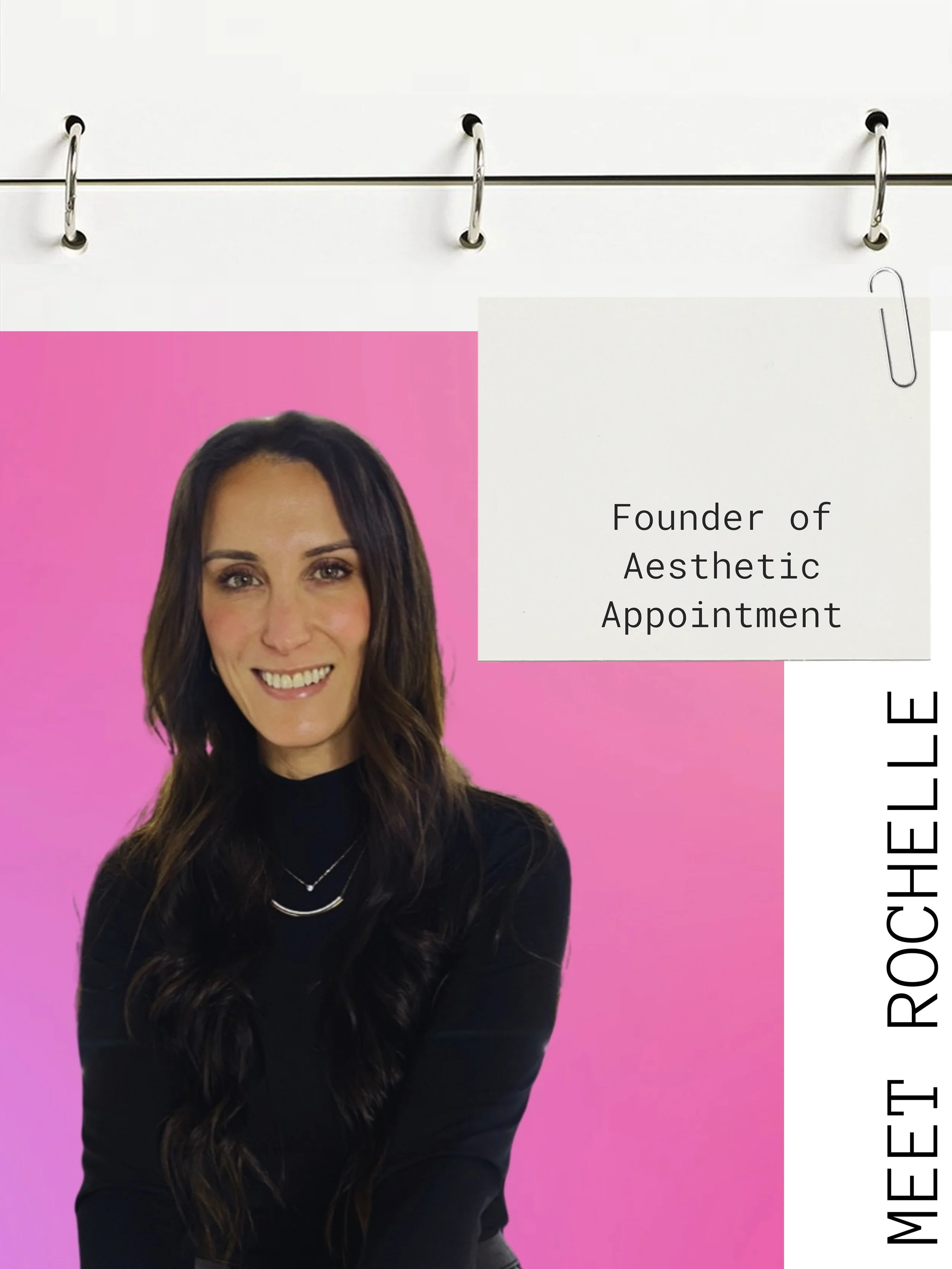
What started as a leap into the unknown has grown into one of South Africa’s most recognisable voices in medical aesthetics.
Behind Aesthetic Appointment is Rochelle Friedman. She’s a journalist, entrepreneur, mother and the woman who built the platform from the ground up. I sat down with Rochelle to talk about the journey, the lessons, the changing aesthetics landscape and what it really takes to build something of your own.
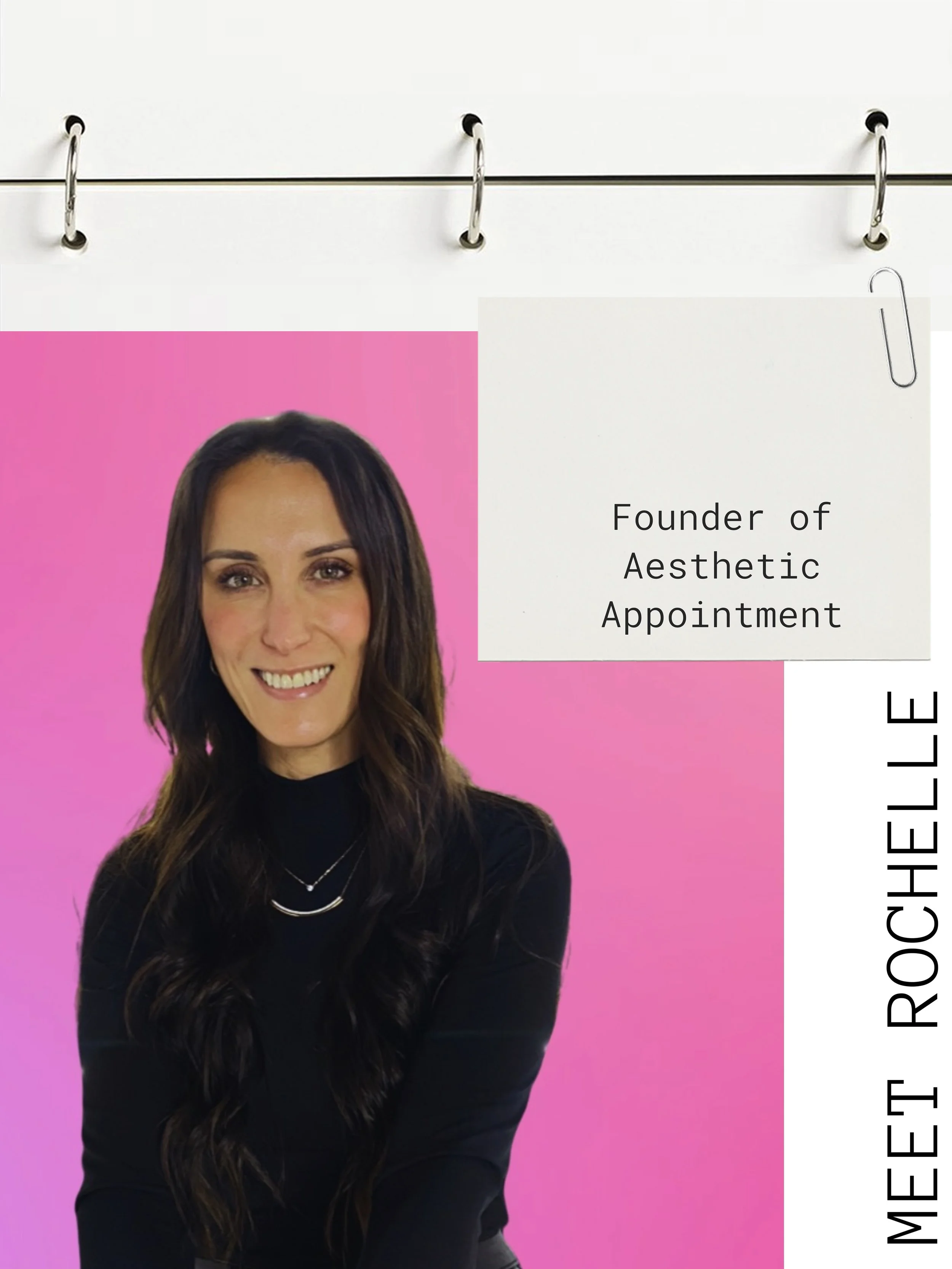
Aesthetic Appointment has become one of the most well-known names in the beauty and aesthetics space. What was the lightbulb moment that made you think, “This is something I need to create”?
I don't think there was one dramatic lightbulb moment. It was more of an evolution – with a fairly terrifying leap in the middle! Before launching Aesthetic Appointment Journal, I ran A2 Aesthetic & Anti-Ageing Magazine as a director for nearly a decade. It was a print publication, and deciding to resign was incredibly difficult. But I knew one thing very clearly: I didn't want to leave the medical aesthetics industry. In fact, quite a few of the doctors told me I wasn't allowed to!
By then, I had years of relationships with doctors and industry professionals and an enormous amount of knowledge about the space. I'd also worked in online publishing previously and have always loved technology. I'm one of those people who will happily teach myself how something works, so over the years I'd learnt how to build and manage websites, load and optimise content, understand analytics, manage social media and navigate all the unglamorous backend things nobody sees.
I knew I could build something again.
Interestingly, when I first registered Aesthetic Appointment, it wasn't actually going to be a publication. The original idea was a booking and practice-management platform for aesthetic clinics – hence the name “Aesthetic Appointment”. Then I pivoted to an online journal and realised the name actually worked rather well. I designed and built the website and had it live within about a month. From there, it just grew.
Step by step, AAJ also started becoming more formally recognised within the industry. We became media partners with local professional societies such as AAMSSA, which isn't simply a case of putting a logo on a website – there's a process involved and, for me, that recognition meant a great deal.
From there, our media partnerships began extending internationally to conferences like DASIL, AMWC and Dubai Derma, with IMCAS hopefully joining that list soon. Those relationships also have a practical benefit for our South African medical professionals, because we're often able to provide AAJ professional readers with discounted registration to attend these international congresses.
One of the things I've realised through that international exposure is just how exceptional many of our South African aesthetic doctors are. We obviously have so much to learn from international experts, but our own doctors are training overseas, presenting internationally, teaching and really trailblazing in certain areas themselves. I'm incredibly grateful that so many of them support AAJ and give their time and expertise to write such excellent articles for our readers.
The purpose of AAJ today is really to help South African patients make sense of medical aesthetics through a trusted media platform. We work with respected doctors, professional societies and legitimate industry distributors, which helps us keep readers informed about everything from established treatments to rapidly developing areas such as GLP-1s, peptides and exosomes.
We try very hard not to wax lyrical about one particular treatment or product because there are so many good options and what is right for one person may be completely wrong for another. Our approach is much more: here are the facts, here is the science, here is the South African regulatory context – now you can have a more informed conversation with an appropriately qualified practitioner.
We're not a clinic, doctor or distributor trying to sell a particular treatment. Yes, we carry advertising like any media publication does, but AAJ has become this interesting, unbiased middle ground where patients, practitioners and industry meet.
Being online has also completely changed the possibilities. People find our articles through Google searches, e.g. “options to treat my child’s scar”, “who is doctor so-and-so” and, of course, AI search.
We regularly receive emails from patients who think they're emailing the doctor or clinic whose article they've just read on AAJ! Professionals use it too, to keep up with launches, research, patient consultation trends and what's happening across the industry.
We now have more than 1,000 articles online, and sometimes the amount of content we publish in a month could probably fill four print magazines. Luckily, I have a great team!
And now that AI has significantly entered the chat, there's a particularly surreal full-circle moment when I'm researching something and ChatGPT or Gemini quotes my own website back to me. I usually think, “Yes, thank you, we published that.”
The aesthetics industry is constantly evolving. What excites you most about where it’s heading and what trends do you think are genuinely worth paying attention to?
I'm really excited by how far we've moved from the aesthetic ideals of the 1990s and early 2000s, when cosmetic procedures were often about dramatically changing the way somebody looked. The conversation today is much more about ageing well, skin and tissue health, subtle improvements and still looking like yourself. Often the best aesthetic result is the one nobody can quite identify.
Scientifically, we're also moving beyond simply “fixing” something and towards understanding the biology of the skin and ageing. Regenerative aesthetics is obviously a huge area of interest, alongside collagen stimulation, energy-based devices, skin quality and treatments designed to work with the body's own biological processes. And of course, we must mention GLP-1s and peptides.
Patients are also becoming far more educated. They're researching ingredients, devices, practitioners and treatment protocols before making decisions, which I think is a positive development – provided they're getting that information from credible sources.
This industry does love a trend, though! Something being viral doesn't necessarily make it good medicine. I'm far more interested in treatments and technologies supported by good science, appropriate patient selection and experienced medical practitioners.
And that's an important distinction because aesthetic medicine is still medicine. I think that sometimes gets lost when aesthetics and beauty are bundled together. Hearing about somebody having filler injected by their nail technician or buying mystery peptides recommended by an influencer genuinely makes me want to cry.
Innovation is incredibly exciting, but it needs to happen alongside education, regulation and patient safety.
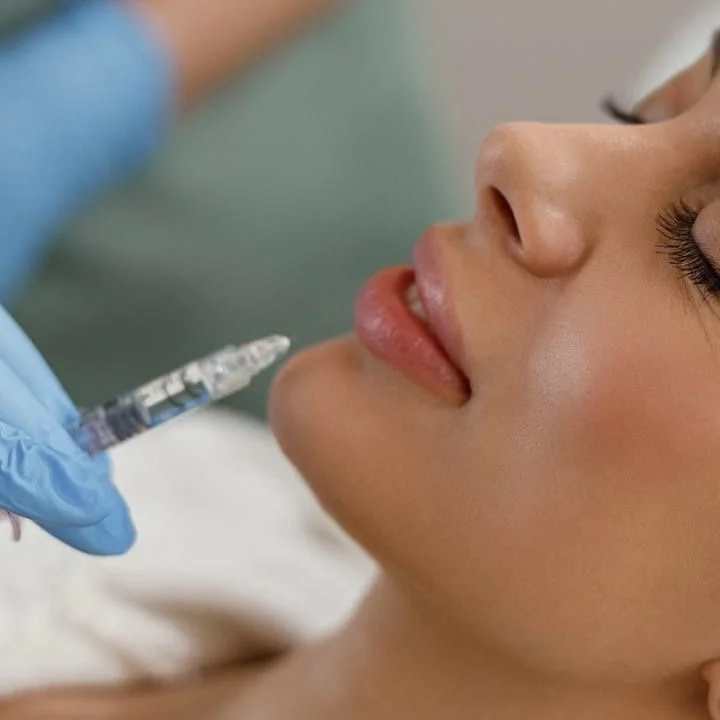
“Women have more freedom than ever to decide how they want to age,” says Rochelle. “We have access to incredible skincare, aesthetic treatments and technologies, and I don't think women should be made to feel guilty for enjoying those things or wanting to look good.”
What’s something you know now about running a business that you wish you’d known when you started?
That there will never be a magical point where everything on the to-do list is finished.
I'm still coming to terms with this!
When you run your own business, there is always another article to edit, email to answer, client to follow up with, invoice to send, social post to prepare or idea you want to pursue, or delegate. In the beginning, I think I equated being “caught up” with doing a good job. I've learnt that running a growing business means you are almost never completely caught up with your to-do list. I've also learnt that you don't have to have everything figured out before you begin – and that it's okay to fail at things along the way. Some ideas work brilliantly. Some absolutely don't. Sometimes the thing you were convinced would work needs to be changed, abandoned or completely reinvented. AAJ itself began as one idea and became something entirely different.
I think being willing to learn, adapt and occasionally admit, “Well, that didn't work, let’s move on”, is actually one of the most useful skills you can have as an entrepreneur. And growth creates its own problems – they're just much nicer problems to have.
There's another lesson that has been much more personal: learning not to underestimate what you've built.
When AAJ first started, I used to call it a “blog”. One of my wonderful journalists eventually corrected me and said, essentially, “Rochelle, this isn't a blog. This is a professional journal.”
It sounds like such a small thing, but it genuinely shifted something in me. I think, like a lot of women, I can sometimes underestimate myself and the value of what I've created. Perhaps there's even a little imposter syndrome mixed in there. I was looking at this publication I'd built, the doctors writing for it, the readership of over 100k, the industry relationships and all the work going into it – and still calling it a blog!
Having somebody else change that perspective gave me an unexpected confidence boost. It made me start seeing AAJ for what it was becoming rather than what it had been when I first sat down and built a website.
So I've learnt that it's okay to fail, it's okay not to know everything, and it's okay for the original idea to change completely. But I've also learnt that sometimes you need to stop moving the goalposts on yourself long enough to acknowledge, “Actually, we've built something really good here.”
Beauty can be a very image-conscious industry. How do you think our relationship with beauty and ageing has changed, particularly for women?
I think there's an interesting contradiction happening.
On one hand, women have more freedom than ever to decide how they want to age. We have access to incredible skincare, aesthetic treatments and technologies, and I don't think women should be made to feel guilty for enjoying those things or wanting to look good.
At the same time, social media has created an almost impossible visual standard. We're constantly exposed to filtered, edited and carefully curated faces, and sometimes I think we've forgotten what normal skin and normal ageing actually looks like. Thankfully, I think aesthetic medicine itself is increasingly moving towards natural results and ageing well rather than trying to erase every sign that you've lived a life.
For me, the healthiest direction isn't about trying to make a 50-year-old woman look 25. It's about helping her look and feel like the best version of herself at 50. Ageing is a privilege. Wanting to look after yourself doesn't mean rejecting ageing, and accepting ageing doesn't mean you have to stop caring about how you look. Women should be allowed to hold both ideas at the same time.
Who is a woman you’d love to sit down with for a long lunch and what would you want to ask her?
Can I have a group lunch? And since we're making the rules, can we add a spa day and champagne?
There are so many incredible women I could choose, but strangely, when I first read this question, the person who immediately came to mind wasn't someone famous. It was my Bobba – my mother's mother.
She was so dear to us all and passed away when I was very young, so I only ever knew her through the eyes of a child. Apparently, she was quite a force to be reckoned with, which makes me wish even more that I could meet and connect with her now as an adult.
I'd want to know about her life, her experiences, what shaped her, what she worried about, what made her laugh and what she thought about motherhood and being a woman in her generation. I'd probably also want all the family stories nobody thought to write down.
I think as you get older, you realise there are questions you never knew you needed to ask when you still had the opportunity.
So yes, if I'm only allowed one person at the lunch, I'd choose my Bobba.
When you’re not working, what does a really good day look like for you?
This question assumes I'm sometimes not working!
For a long time, I really did work around the clock – squeezed between mom schedules, baby things, then toddler things and now mini-child things. Over the past year or so, though, I've made a conscious decision to protect some time from work. Come Friday afternoon, I shut down my work routines completely. I don't answer work emails, calls or WhatsApps. I don't work. I don't even let myself write down a work idea, because I know exactly where that will lead!
For a full 25 hours, work is off. I'll check in on emails on a Sunday, but I try to keep the rest of the weekend dedicated to my family and friends – and I've become much better at actually being at the braai rather than being at the braai while secretly working from my phone.
My daughter is four now, and I built AAJ while raising her, so for a while it really felt like having two under two!
Life outside work is very much dedicated to being with her and her dad. A really good day is actually very simple: family, friends, being outdoors, a walk, the gym, good coffee, something good to eat and nowhere we need to rush to. Moving to Cape Town from Johannesburg last year has also made me appreciate slowing down and being outdoors much more. Give me sunshine, the mountain or ocean nearby, and I'm very happy.
What’s currently on repeat in your life: a song, show, book, podcast or obsession?
This probably circles right back to my love of technology and learning how to build things. I've somehow fallen down an AI music-production rabbit hole and started creating music for both adults and children in my spare time – because apparently running an online publication and raising a four-year-old wasn't keeping me busy enough! I've always loved the intersection between creativity and technology, and right now I'm fascinated by what these new tools allow an ordinary person to create. I'll get an idea, start writing lyrics, experiment with melodies and production, and suddenly something that only existed in my head is an actual song. There's something quite special about using new technology to create something that hopefully brings a little more light into the world.
So I suppose my current obsession isn't one particular song, show or podcast. It's learning, experimenting and making things, which now that I think about it, has probably been on repeat throughout most of my life.